


Early Signs to Watch
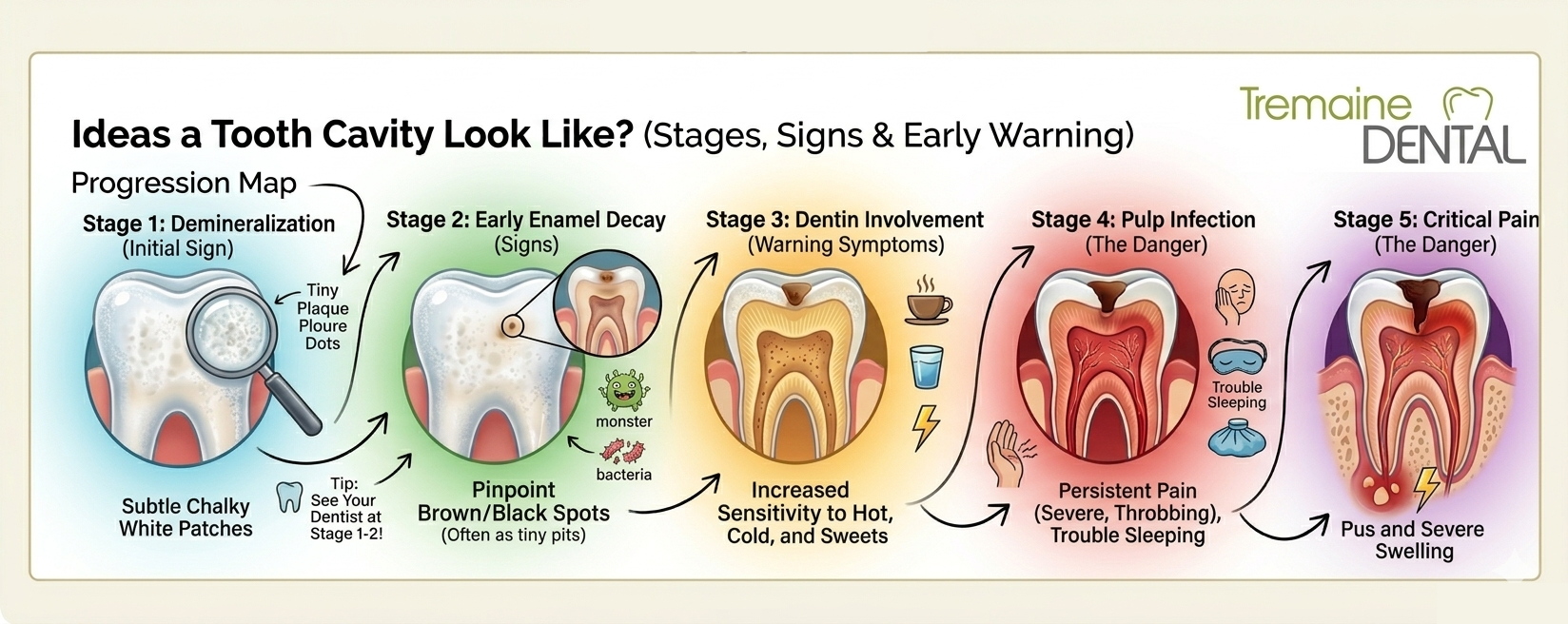
A tooth cavity is one of the most common dental problems, yet many people don’t notice it until it becomes painful or serious. Understanding what a cavity looks like and how it develops can help you detect it early and avoid complex tooth decay treatment. At Tremaine Dental, our experienced team in Milton, ON is here to help you identify, treat, and prevent cavities at every stage.
In this guide, you will learn how to identify a cavity in tooth, understand its stages, and explore the best dental cavities treatment options.
Quick Overview
- A tooth cavity is a hole caused by tooth decay
- Early signs include white spots and mild sensitivity
- Advanced cavities appear as dark spots, holes, or pits
- Treatment ranges from fluoride to fillings or root canals
- Early detection helps prevent pain and expensive procedures
What Is a Tooth Cavity?
A tooth cavity is a permanently damaged area in the tooth that develops into a small hole. It occurs when bacteria produce acids that gradually break down the enamel. According to Health Canada, cavities can develop at any age and are among the most preventable oral health conditions in the country.
If not treated early, the decay spreads deeper into the tooth, requiring more advanced tooth decay treatment. Our
family dentistry team at Tremaine Dental regularly helps patients in Milton and surrounding areas catch cavities before they become serious.
What Does a Tooth Cavity Look Like?
The appearance of a tooth cavity changes depending on its stage:
White Chalky Spots
The earliest sign of a cavity in tooth is a white or dull spot on the enamel. This indicates mineral loss.
Brown or Black Discoloration
As decay progresses, the tooth may develop brown or black spots.
Visible Holes or Pits
A clear sign of a tooth cavity is a small hole that may be visible or felt with your tongue.
Dark Lines on Molars
Cavities can form along grooves in molars, appearing as dark lines.
Crumbling or Weak Tooth
In advanced stages, the tooth may appear damaged, chipped, or weakened. At this point, a dental crown & bridge may be needed to restore structure and function.
Stages of a Tooth Cavity
Understanding the stages helps you seek the right dental cavities treatment at the right time:
Stage 1: Demineralization
Minerals are lost from enamel, leading to white spots. This stage can be reversed with fluoride and improved oral hygiene.
Stage 2: Enamel Decay
The enamel begins to break down, and small cavities start forming. Routine teeth cleaning and check-ups can catch decay at this stage before it advances.
Stage 3: Dentin Decay
Decay reaches dentin, causing sensitivity to hot, cold, or sweet foods. Fillings are commonly required at this stage.
Stage 4: Pulp Damage
The inner pulp becomes infected, leading to pain. This is when a root canal treatment is typically recommended to save the tooth and relieve discomfort.
Stage 5: Abscess
A severe infection develops at the root, requiring urgent tooth decay treatment. If you are experiencing severe pain, our emergency dentistry team at Tremaine Dental is available to help.
Signs and Symptoms of a Tooth Cavity
Even if a cavity is not visible, you may notice:
- Tooth sensitivity
- Persistent toothache
- Pain when chewing
- Visible discoloration or holes
- Bad breath or unpleasant taste
- Swelling in advanced cases
The Canadian Dental Association notes that many patients are unaware they have a cavity until it has progressed significantly, which is why regular dental visits are essential.
Causes of Tooth Cavities
A tooth cavity develops due to multiple factors:
- Poor oral hygiene
- Frequent consumption of sugary or acidic foods
- Bacterial plaque buildup
- Dry mouth
- Frequent snacking
Children are particularly vulnerable to early cavities. Our children’s dentistry program includes preventive care tailored specifically to young patients, helping establish healthy habits early.
Dental Cavities Treatment Options
The best dental cavities treatment depends on the severity:
Fluoride Treatment
Effective in reversing early-stage decay. Our team offers professional fluoride applications as part of our preventive care.
Fillings
The most common treatment for a cavity in tooth. Our family dentistry service includes composite (tooth-coloured) fillings for a natural look.
Crowns
Used when the tooth is heavily damaged. Learn more about our dental crown & bridge service to restore both function and appearance.
Root Canal Treatment
Required when decay reaches the pulp. Our gentle root canal treatment approach ensures patients are comfortable throughout the process. For anxious patients, sedation dentistry options are also available.
Tooth Extraction
Necessary if the tooth cannot be saved. Our teeth extractions service is performed with care to minimize discomfort and support recovery.
For long-term oral health, early tooth decay treatment is always the best approach.
How to Prevent a Tooth Cavity
Preventing a tooth cavity is easier than treating one:
- Brush twice daily with fluoride toothpaste
- Floss daily
- Limit sugar intake
- Drink water regularly
- Visit your dentist for routine checkups
- Use antibacterial mouthwash
According to the Canadian Health Measures Survey, 96% of Canadian adults have a history of cavities — underscoring how important preventive care truly is. Regular teeth cleaning appointments and oral cancer screening are both integral parts of a comprehensive preventive dental routine.
When Should You See a Dentist?
Consult a dentist if you notice:
- Continuous tooth pain
- Sensitivity that worsens over time
- Visible holes or dark spots
- Swelling or infection
Early diagnosis makes dental cavities treatment simpler and more effective. If you are in pain, don’t wait — contact our emergency dentistry team right away. For new patients, we also encourage you to explore our family dentistry services to get started with comprehensive, ongoing care.
Frequently Asked Questions (FAQ)
Q1: What does the beginning of a tooth cavity look like?
It usually appears as a white or chalky spot on the enamel.
Q2: Can a tooth cavity go away on its own?
No, once a cavity forms, it requires professional tooth decay treatment. Early stages may be reversible with fluoride therapy.
Q3: Is a black spot always a cavity?
Not always, but it can indicate decay. A dental checkup is recommended.
Q4: How long does it take for a cavity to form?
It can take several months or years depending on oral hygiene and diet.
Q5: Do cavities always hurt?
No, early cavities are often painless, which is why regular dental visits are important.
About the Author
This article is written by a dental content specialist with experience in creating clear, research-based, and patient-focused oral health content. The aim is to simplify complex dental topics and help readers make informed decisions about their dental care.
Final Thoughts
A tooth cavity may begin as a small, harmless-looking spot, but it can quickly develop into a serious dental issue if ignored. Recognizing early signs, understanding the stages, and seeking timely dental cavities treatment can make a significant difference in your oral health.
By maintaining good hygiene and staying alert to changes in your teeth, you can prevent most cavities before they require advanced tooth decay treatment. Even a minor cavity in tooth should never be overlooked, as early care helps you avoid discomfort, complications, and costly procedures.
At Tremaine Dental in Milton, ON, our full-service team is ready to help — from preventive teeth cleaning to advanced root canal treatment. Book your appointment today and take the first step toward a healthier smile.